
Identity checks – Updated 21 September 2026
Legit99 KYC and verification: what Australian players should know
 Available in AU
Identity verification is part of the Legit99 account and withdrawal process, but the current evidence does not support a reliable public checklist of exact KYC documents, a universal trigger point or a standard processing time. That distinction matters. It is reasonable to prepare for an identity check before relying on a withdrawal, but it is not responsible to copy a generic passport, utility-bill or selfie list and present it as Legit99’s confirmed requirement. This guide focuses on what is supported: keeping account details consistent, responding only through genuine operator channels, retaining records of verification requests and understanding how an unfinished identity check can affect a cash-out. The full review places that verification boundary alongside the wider Australian account and trust evidence.
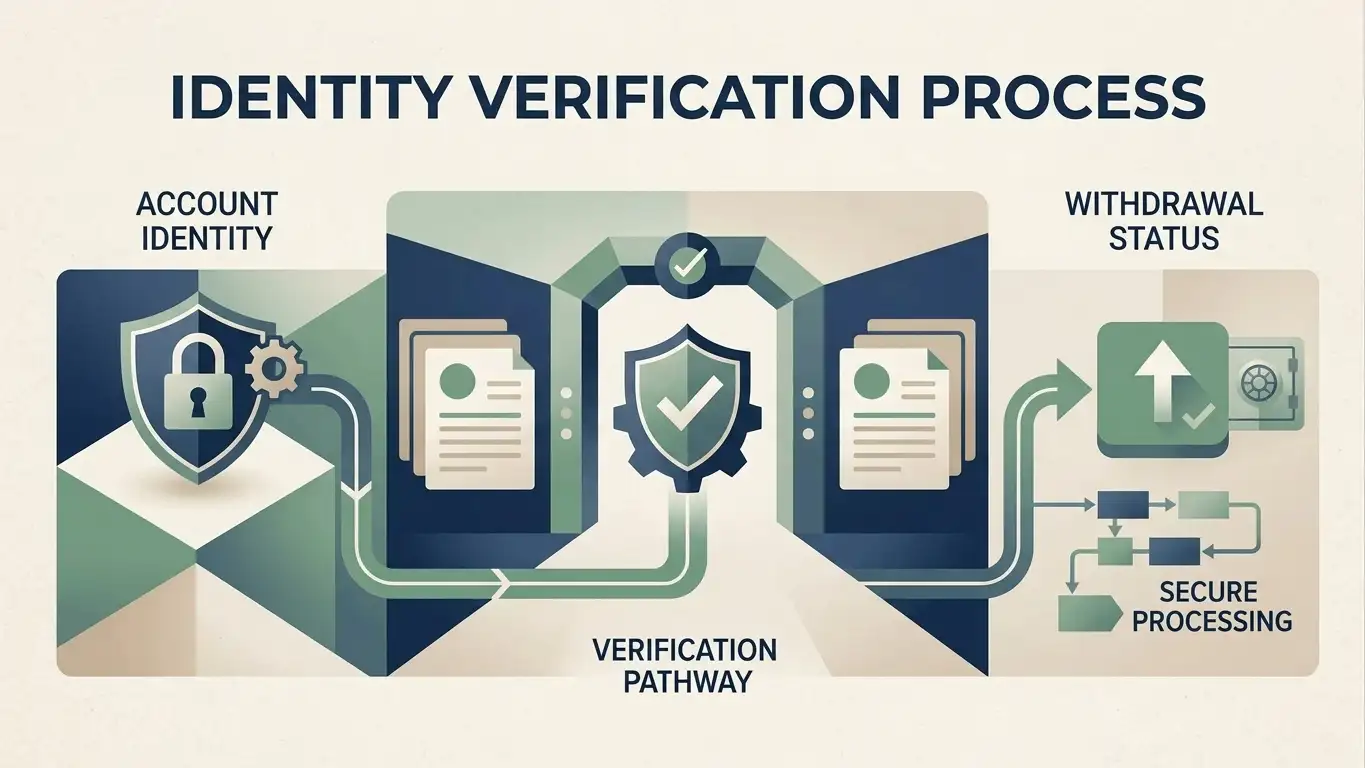
Table of Contents
- Legit99 KYC in one minute
- What is actually confirmed about the verification process
- Why matching account and payment details matters
- How verification can intersect with a withdrawal
- A practical record to keep during verification
- Where the strongest KYC evidence comes from
- Use the genuine operator channel for sensitive files
- Australian consumer-protection context is separate from KYC
- Questions about Legit99 verification
- Sources and evidence boundary
- What Legit99 verification means before a withdrawal
Legit99 KYC in one minute
| Question | Evidence position | Practical meaning |
|---|---|---|
| Does Legit99 use identity verification? | Yes, KYC or identity verification is documented in the account and withdrawal context. | Be prepared for an identity check before a payout is completed. |
| Which documents are required? | No exact operator-specific list was verified from suitable primary content. | Use only the request shown in the genuine account interface or official support channel. |
| How long does verification take? | No standard Legit99 processing time was verified. | Do not treat a third-party estimate as a guaranteed review window. |
| Can KYC affect a withdrawal? | Verification is connected to the account and withdrawal journey. | An incomplete request can become part of a cash-out delay or dispute. |
What is actually confirmed about the verification process
The evidence base supports one narrow but important statement: identity verification exists within the Legit99 account and withdrawal process. A current Australian-focused third-party page describes identity verification before withdrawals, while Australian complaint material also shows verification appearing in payout discussions. That is sufficient to explain the dependency without pretending that every account follows an identical workflow.
It does not establish a fixed sequence such as “upload ID, wait 24 hours, then withdraw”. Nor does it establish a universal list of accepted files. Those details can depend on the account, payment route, transaction history and the operator’s current checks. The correct boundary is to confirm the existence of verification while leaving unsupported implementation detail out.
If the account is being opened for the first time, the broader registration explains what can be verified about setup without inventing form fields or promising a specific onboarding path.
Why matching account and payment details matters
Identity checks are easier to understand when the account record, payment ownership and withdrawal request are treated as connected evidence. A mismatch does not automatically prove wrongdoing, but it can create extra questions about who controls the account or payment method. That is why basic consistency is more useful than trying to predict an undocumented KYC checklist.
- Use your own accurate personal details rather than nicknames or another person’s identity.
- Keep the spelling of your name consistent with the payment account you control.
- Do not assume a deposit method proves that the same rail will be available for withdrawals.
- Keep access to the email address or phone number connected to the account if the operator uses it for account communication.
- Read each verification request as it appears rather than pre-emptively sending sensitive files that were not requested.
This is record and account hygiene, not a claim about a specific Legit99 document requirement. The distinction prevents generic industry advice from being mistaken for operator terms.
How verification can intersect with a withdrawal
A withdrawal can involve more than moving money from the casino balance to a payment destination. The account holder may need to satisfy an identity check before a request is completed. Public Legit99 complaint records show that account and withdrawal disputes can become extended, so preserving the verification trail can matter if a payout later needs to be reconstructed.
The separate withdrawals covers the cash-out evidence in detail. It intentionally does not publish an exact payout limit, fee table or method-by-method processing schedule because suitable primary terms were not verified for those numbers. KYC follows the same evidence standard: existence can be stated, exact high-risk details cannot be filled in from generic casino practice.
A practical record to keep during verification
If an identity check becomes part of a delayed cash-out, a simple evidence trail is more useful than trying to remember the sequence later. Keep records without exposing them publicly.
- Record the request. Save the date, time and exact wording of the verification request shown in the account or official support conversation.
- Record what you submitted. Note the file category and submission time, but avoid keeping unnecessary unprotected copies on shared devices.
- Save status changes. Capture messages such as received, pending, rejected or completed if the interface displays them.
- Keep support transcripts. Preserve any case number and any explanation of what still needs attention.
- Link the timeline to the withdrawal. If a cash-out was already requested, record when the verification step entered the process.
Where the strongest KYC evidence comes from
The strongest evidence for a verification requirement is the request shown inside the current account or another genuine operator channel. Public reviews and complaint records can confirm that KYC exists in the Legit99 account and withdrawal process, but they cannot safely define the exact files or timing for a different account. That is why this page treats a live account request as the point where the requirement becomes specific rather than copying a generic casino checklist.
If a request appears, preserve the exact wording, the time it was shown, any submission confirmation and the later account or withdrawal status. Those records help separate three different questions: what the operator requested, what the player supplied and what happened afterwards. They are also more useful in a dispute than an undated third-party list of documents. The same evidence standard applies to timing: without a current primary Legit99 rule, no fixed verification window is stated here.
This approach keeps the page practical without turning common KYC habits into operator policy. It also reduces the risk of sending extra identity material simply because an unrelated review says a particular document is usually requested.
Use the genuine operator channel for sensitive files
KYC material can contain highly sensitive identity information. A request arriving through an unexpected social-media account, messaging profile or unrelated email address should not be treated as legitimate merely because it uses the casino name. Verify the domain and account channel before sending anything.
Casino Guru places an explicit warning on its complaint pages that it does not ask players for payment or account access to complete KYC and that users should verify the sender domain when contacted about a complaint. That warning is specific to impersonation of Casino Guru, but the broader lesson is relevant: identity documents should not be sent to an unverified third party just because a payout dispute is underway.
Australian consumer-protection context is separate from KYC
Verification should not be confused with Australian licensing. A 21 September 2026 search of the ACMA licensed interactive gambling register found no local Legit99 licence. An operator asking for identity information does not by itself mean that the service is ACMA-licensed, ACMA-approved or covered by Australian licensed-wagering dispute protections.
The broader regulatory position, licence evidence and operator-risk signals are handled on the trust and licensing. Keeping that discussion separate helps avoid a common mistake: treating the existence of KYC as proof of regulatory status.
Questions about Legit99 verification
What documents does Legit99 require for KYC?
No exact operator-specific document list is published here because suitable primary evidence for the list was not verified. Follow the request shown in the genuine account interface or official support channel.
How long does Legit99 verification take?
No standard verification time was verified from suitable primary Legit99 material, so this guide does not publish a fixed number of hours or days.
Is KYC connected to withdrawals?
Yes. Identity verification is documented in the account and withdrawal context, which is why unresolved verification can matter when a cash-out is being processed.
Does KYC mean Legit99 has an Australian licence?
No. Identity checking and local licensing are separate questions. No local Legit99 licence was verified in the Australian register check used for this project.
Sources and evidence boundary
The existence of identity verification is supported by the current Australian-focused Legit99 third-party overview and the withdrawal context in a recent Australian Legit99 complaint record. Neither source is used to create an exact document checklist or guaranteed verification time. Those details remain excluded until suitable primary Legit99 KYC or terms content can be verified.
What Legit99 verification means before a withdrawal
For an Australian reader, the useful conclusion is narrow and practical. Legit99 uses identity verification in the account and withdrawal journey, so a payout plan should allow for a KYC step. At the same time, the public evidence does not justify inventing a document list or a promised review time. Keep account and payment details consistent, answer only requests shown through genuine channels, retain the verification timeline, and treat any exact requirement as current only when it is displayed by the operator itself.
Published by the Legit99 Casino team.